7 Reasons Why Most People Fail in the Gym (and How Coaching Changes That)
Starting a new gym routine is exciting.
You set a goal. You find a workout online. You promise yourself you’ll train three or four times a week. Maybe you even buy a new pair of shoes to make it official.
Then life happens.
Work gets busy. You miss a session. You’re not seeing the results you expected. You’re unsure whether you’re doing an exercise correctly. Suddenly, the routine that felt so motivating a few weeks ago starts to feel like another thing on your to-do list.
If this sounds familiar, it doesn’t mean you’ve failed at fitness.
More often than not, it means you’ve been trying to build consistency without the right structure, support or understanding behind it.
At Beyond Best Personal Training in Collingwood, we see this often. Good coaching isn’t about pushing you harder for the sake of it. It’s about giving you a clear plan, personalised support and a training routine that can actually fit into your life.
Motivation Isn’t the Whole Answer
Motivation is useful, but it’s not a strategy.
When you’re excited about a new goal, motivation can get you through the door. But motivation naturally changes depending on your workload, sleep, stress, social life and everything else happening outside the gym.
That’s why relying on motivation alone can make gym consistency difficult. A sustainable training routine needs to work on ordinary weeks as well as good ones.
Instead of relying on willpower, it helps to have clear goals, understand what your sessions are designed to achieve and follow a realistic plan that can adjust when life changes.
The goal isn’t to feel motivated every time you train. It’s to understand what you’re working towards, know what you need to do and have a plan that makes showing up feel achievable.
1. You Start Without a Clear Goal
“I just want to get fitter” is a great place to start, but it doesn’t necessarily tell you what to do next.
Are you trying to build strength? Improve your fitness? Feel more confident in the gym? Move better? Support your overall health?
Those are all worthwhile goals, but they can mean very different things when it comes to your training.
Without a clear goal, it’s easy to jump between different workouts without knowing whether they’re actually moving you forward.
A good personal training program starts by understanding where you are now, where you want to go and what your current capacity looks like.
From there, your training can have a purpose. You’re not just completing exercises. You know why you’re doing them.
2. You’re Following Random Workouts
There’s no shortage of workout content online.
Five-minute abs. Full-body circuits. “Do this for six weeks.” “Try this exercise for bigger shoulders.”
Online fitness content can be useful for ideas and education, but constantly changing your workouts can make it difficult to build meaningful progress.
Strength, movement quality and fitness are built over time.
That means giving your body opportunities to practise movements, develop skill, gradually increase the challenge and adapt.
A structured strength training program gives you that consistency.
That doesn’t mean doing exactly the same workout forever. Your training should evolve, but those changes should have a reason behind them.
Rather than wondering what you should do every time you walk into the gym, you have a plan to followand a reason behind it.
3. You Expect Results Too Quickly
One of the easiest ways to lose motivation is expecting your body to change overnight.
You might train consistently for a few weeks and wonder why you don’t feel dramatically different yet. But progress isn’t always obvious straight away.
Sometimes it’s lifting a little more weight. Moving with better control. Recovering faster between sessions. Feeling less tired after a workout. Walking into the gym with more confidence. Understanding an exercise that used to feel intimidating.
These small improvements matter.
Part of good coaching is helping you recognise progress in more than one way. Improvements in strength, movement, confidence and consistency can all be signs that your program is working.
Sustainable progress is built through repetition, patience and consistency, not by constantly chasing the next quick fix.

Structured strength training with the right guidance can make progress feel clearer and more achievable.
4. Consistency Becomes Difficult
Knowing what you should do and actually doing it are two different things.
Life gets hectic. Work deadlines change. Sleep suffers. Holidays happen. You miss a day, then another. Before you know it, your routine has disappeared.
But consistency doesn’t mean following a perfect schedule every week. This is where accountability and personalised coaching can make a real difference.
A coach can help you establish a realistic training frequency, work around your schedule and adapt your sessions when needed.
Sometimes that might mean completing a shorter session. Sometimes it means changing the intensity. Other times, it simply means getting back into your normal routine after a disrupted week without feeling like you have to start again.
Having someone expecting you to show up doesn’t need to mean being pressured or judged.
It can simply give your training more structure. The aim isn’t perfection. It’s building a routine that can survive real life.
5. You’re Not Sure If You’re Doing Things Correctly
Walking into a gym and knowing where to start can be intimidating, particularly if you’re unfamiliar with strength training.
Are you using the right technique? Is the weight appropriate? Should you be doing more repetitions? Is the exercise actually helping you reach your goal?
Even experienced gym-goers can develop habits that limit their progress or make certain movements uncomfortable. Coaching provides another set of eyes.
At Beyond Best, every client starts with a comprehensive movement screen so our coaches can understand how you move, identify strengths and limitations, and establish a clearer starting point for your program.
Rather than expecting you to fit a generic program, your training can be adjusted around you.
A personal trainer can also guide your movement, help you understand what you should be feeling and make small changes to things like position, tempo and technique as you become more confident.
Over time, the goal isn’t to make you dependent on your coach. It’s to help you understand your own training.
6. You Keep Doing the Same Thing
There’s comfort in doing what you know. But your body adapts, and your training may need to adapt with it.
Progression doesn’t always mean lifting heavier weights or making every session more intense.
It might mean increasing repetitions, improving your range of motion, refining your technique, changing the complexity of an exercise or gradually increasing your overall training volume.
There are also times when the right decision is to stay where you are for a little longer. A good coach looks at the bigger picture.
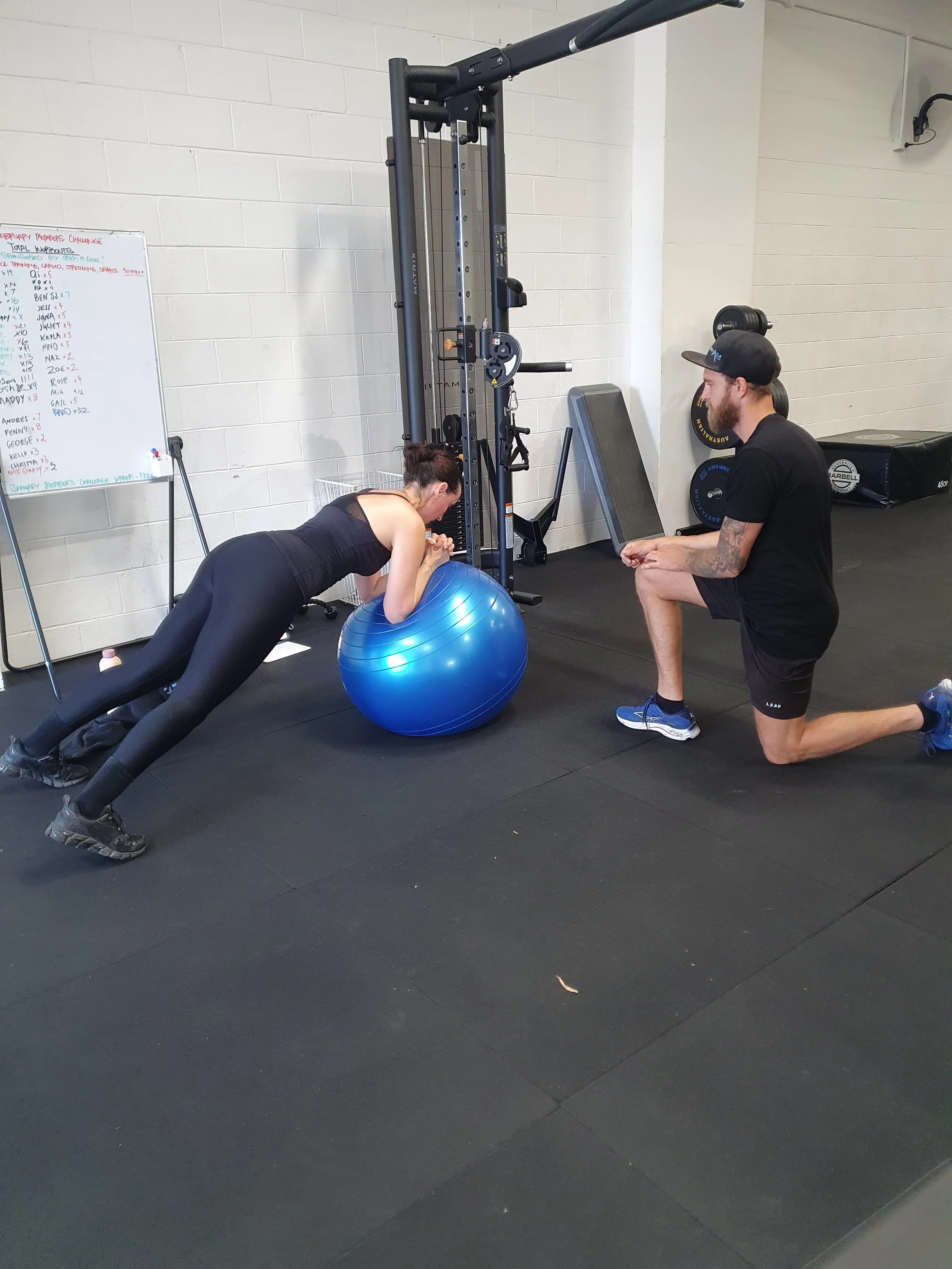
Personalised coaching helps clients build strength, stability and confidence at their own pace.
If you’re progressing well, your program can gradually become more challenging. If your technique is still developing or recovery is limited, the focus might remain on building a stronger foundation.
Progress isn’t about doing more for the sake of doing more. It’s about doing what makes sense for you.
7. You Forget That the Gym Is Only Part of the Picture
Your workout is one part of your health. Sleep, nutrition, stress, recovery and your lifestyle all influence how you feel in the gym and how well you respond to training.
A demanding week at work can affect your energy. Poor sleep can change how recovered you feel. Inconsistent nutrition can affect your training, while ongoing stress can make an already difficult session feel harder.
That doesn’t mean every part of your life needs to be perfectly optimised before you can make progress.
Sometimes the better approach is simply adjusting your expectations, prioritising recovery or looking at what’s happening outside the gym.
That’s why coaching at Beyond Best extends beyond simply counting repetitions.
Our approach is about understanding the bigger picture and helping you build habits that support your life rather than compete with it.
For people who want more personalised support in this area, Beyond Best also offers Nutrition Coaching, focused on practical habits that can fit into everyday life.
So, What Does Good Coaching Actually Do?
Good coaching gives you more than a workout.
It gives you structure when you don’t know where to start.
Accountability when consistency becomes difficult.
Education so you understand what you’re doing and why.
And personalised progression so your training can evolve with you.
At Beyond Best, personal training starts with a comprehensive movement screen. From there, training is built around your individual goals, current ability and limitations rather than relying on a generic program.
As you progress, your training progresses with you.
Exercises can be adjusted. The challenge can increase when appropriate. Sessions can adapt when circumstances change.
Most importantly, you should gradually become more confident in what you’re doing and why you’re doing it.
Because personal training shouldn’t just be about having someone stand beside you while you exercise.
It should help you feel stronger, more capable and more confident in your ability to train and look after your health for the long term.
You Don’t Have to Figure It Out Alone
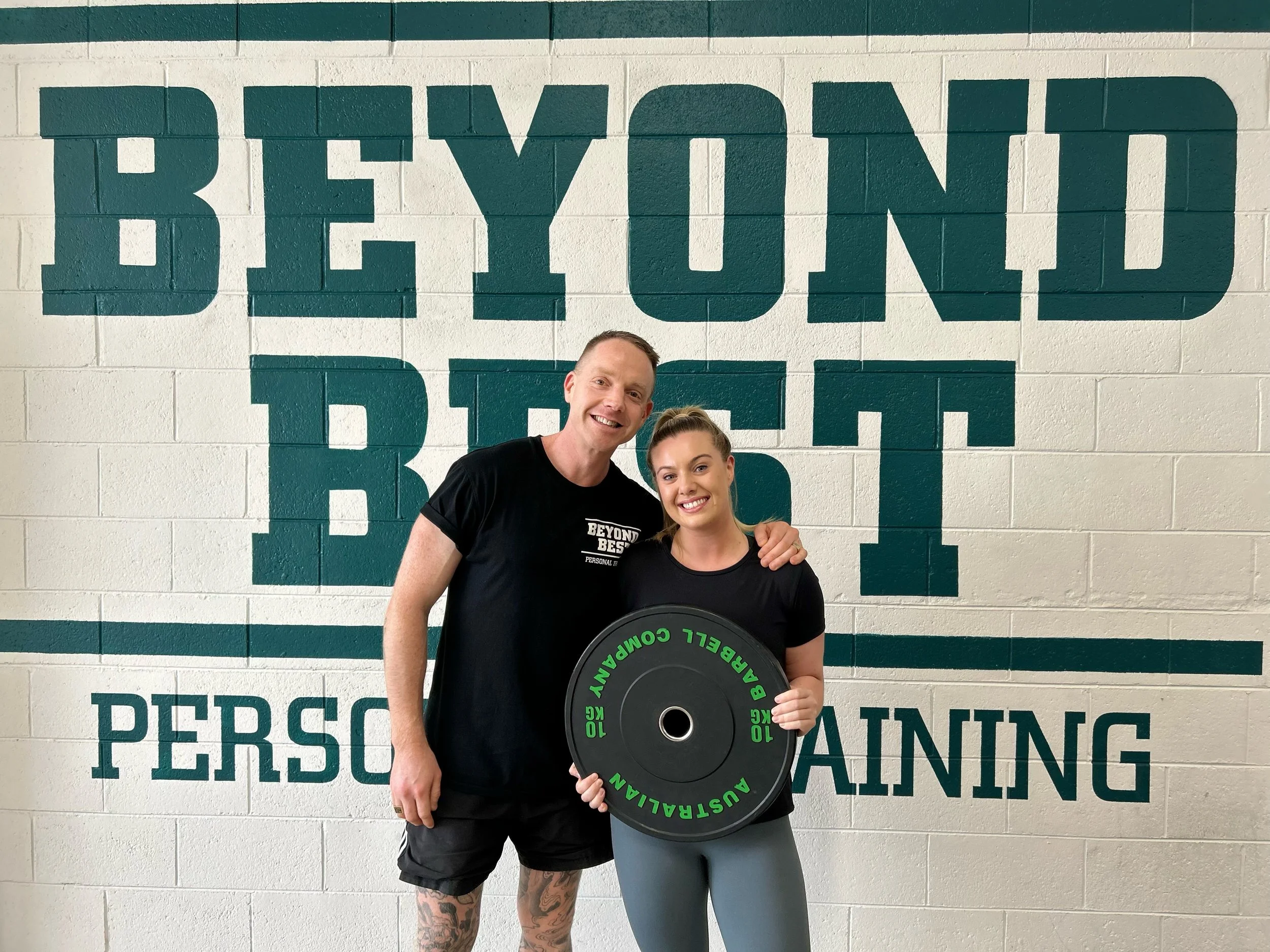
Progress looks different for everyone. At Beyond Best, every milestone is worth recognising.
If you’ve struggled with gym consistency, lost motivation or simply feel like you’re not making the progress you want, you’re not alone.
And you don’t necessarily need more motivation. You might just need a better approach.
A clear plan, appropriate progression and personalised support can make training feel much less complicated.
Instead of constantly wondering what you should be doing, you can focus on gradually getting stronger, moving better and building a routine that actually fits your life.
That’s what we believe good coaching should do.
Ready to make your training feel more structured, personalised and achievable?
Book a Personal Training session at Beyond Best in Collingwood and see what a more personalised approach can look like for you.